
10 Places in Vietnam with Chinese Heritage

Vietnam has centuries-old connections with Chinese communities through migration, trade, religion, and culture. These influences are still visible today in temples, architecture, festivals, cuisine, and even local dialects.
1. Chợ Lớn (Ho Chi Minh City)
Established by Chinese migrants in the 18th century, Chợ Lớn is the largest Chinatown in Vietnam. It was built by Hoa (ethnic Chinese) communities, especially Cantonese, Teochew, Hokkien, and Hainanese groups. Today, you’ll still find:
Traditional Chinese medicine shops
Herbal markets
Lantern-decorated streets
Bilingual Vietnamese-Chinese signage
Many families here still preserve Chinese customs, dialects, and festivals like Lunar New Year and the Lantern Festival.

2. Thiên Hậu Temple
Built by Cantonese immigrants in the 1700s, this temple honors Mazu (Thiên Hậu Thánh Mẫu), the sea goddess believed to protect sailors and traders on their journeys from China to Vietnam.The temple reflects classic southern Chinese architecture with:
Incense coils hanging from the ceiling
Ceramic figurines on rooftops
Chinese calligraphy panels
It remains a spiritual center for the Chinese-Vietnamese community.

3. Hội An Ancient Town
From the 15th to 19th centuries, Hội An was a major international trading port where Chinese merchants settled and formed communities.Their influence can be seen in:
Assembly halls
Merchant houses
Clan temples
Traditional festivals
Many buildings combine Vietnamese, Japanese, and Chinese architectural styles, showing Hội An’s multicultural past.

4. Fujian Assembly Hall
Built by Fujian (Phúc Kiến) Chinese merchants, this hall served as a gathering place for people from the same province in China.It functioned as:
A community center
A place for business networking
A temple for worship
The ornate gates, dragon sculptures, and red-gold decorations symbolize prosperity and protection.

5. Cantonese Assembly Hall
Constructed by Cantonese traders, this hall highlights the role of Chinese merchants in regional trade.It features:
Dragon statues representing power
Courtyards for community gatherings
Shrines honoring historical figures
Assembly halls like this helped Chinese immigrants preserve their identity abroad.

6. Ong Bon Temple
Built by the Teochew Chinese community, this temple honors Ong Bon, a guardian deity believed to protect the neighborhood. It serves as both a religious site and a community gathering place for Chinese-Vietnamese families.

7. Cha Tam Church
Also known as St. Francis Xavier Church, this unique site was built for Chinese Catholics in Saigon. Its architecture blends European church design with Chinese decorative elements, reflecting cultural fusion.

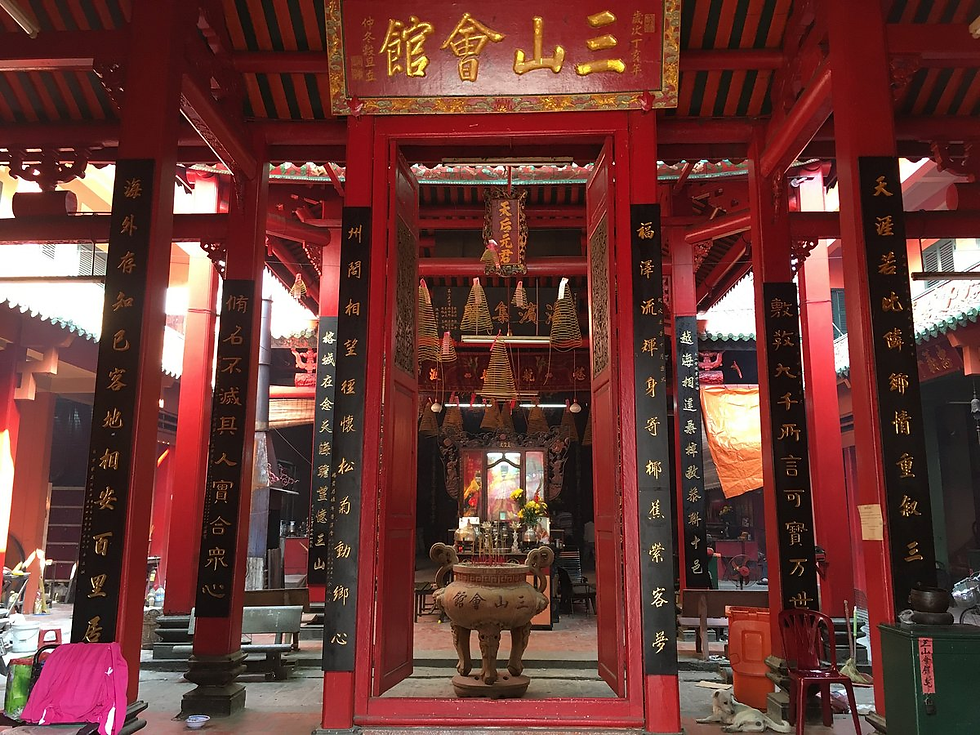
8. Tam Son Hoi Quan Pagoda
Founded by the Fujian Chinese community, this pagoda worships sea deities and protective gods important to migrants who traveled by ship. It remains an important spiritual site during major festivals.
9. Quang Trieu Assembly Hall
Built by Cantonese merchants, this hall showcases traditional Chinese architecture and served as a meeting place for traders from Guangdong province.

10. Duong Dong Town
Historically influenced by Chinese traders and settlers, the town’s markets and temples reflect maritime trade links between southern China and Vietnam.


Bình luận